
Description
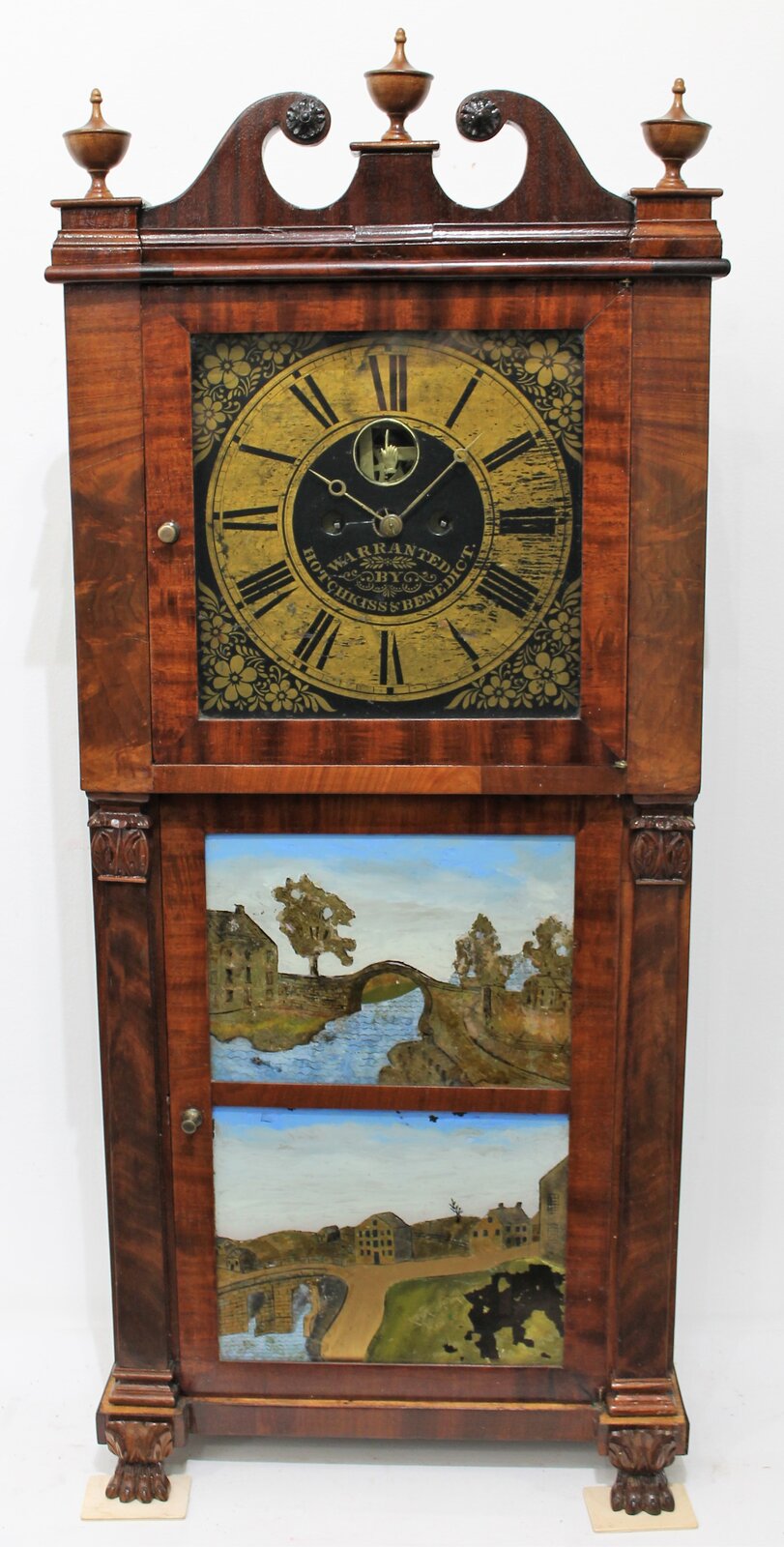
Hotchkiss & Benedict “Patent Eight-day Brass Clock”, 1834-1836. Hotchkiss and Benedict were partners with Asa Munger, and when Munger quit clockmaking the business reformed as Hotchkiss & Benedict, leaving a clockmaking firm headed by a silversmith (Benedict) and a tailor (Hotchkiss). The business only lasted two years, in part because the use of NY state prison labor was becoming an issue in Albany, and in part because of poor marketing. They continued to use Munger-designed movements, now numbered (this one is #2496). H&B used wooden rather than metal dials, often black with gold chapter rings, as found here. The hands were also gold (brass or painted), along with the distinctive “pointing hand” seconds bit. Although most clocks had a mirror in the lower door, some had a split door panel with a reverse-painted tablet above a mirror. The two tablets in this example are very old and have been touched up (with noticeable losses to the lower tablet), but may not be original to this clock, based on the lack of glazing. The upper door glass is original. The crest of this clock is a replacement, as most of their clocks had a traditional flat or carved splat. None had a pillar & scroll top. The painted dial shows considerable wear and is not original to this clock, and does not fit well. The 8-day, time-and-strike movement won’t even think about running and is covered in oil. It will need a major rebuilding. One upper pulley looks original, one a modern replacement; the use of hanging pulleys is odd, as there are cutouts in the top for standard wooden pulleys. I have seen long round 10-lb weights used in another H&B clock. There are remnants of wallpaper inside behind the card label attached to the back wall. The flying eagle pendulum is lead. As you can see, there are a lot of issues with this clock, but that is common with these early clocks. $400-$600.
Record courtesy of AntiqueAmericanClocks.com