
Description
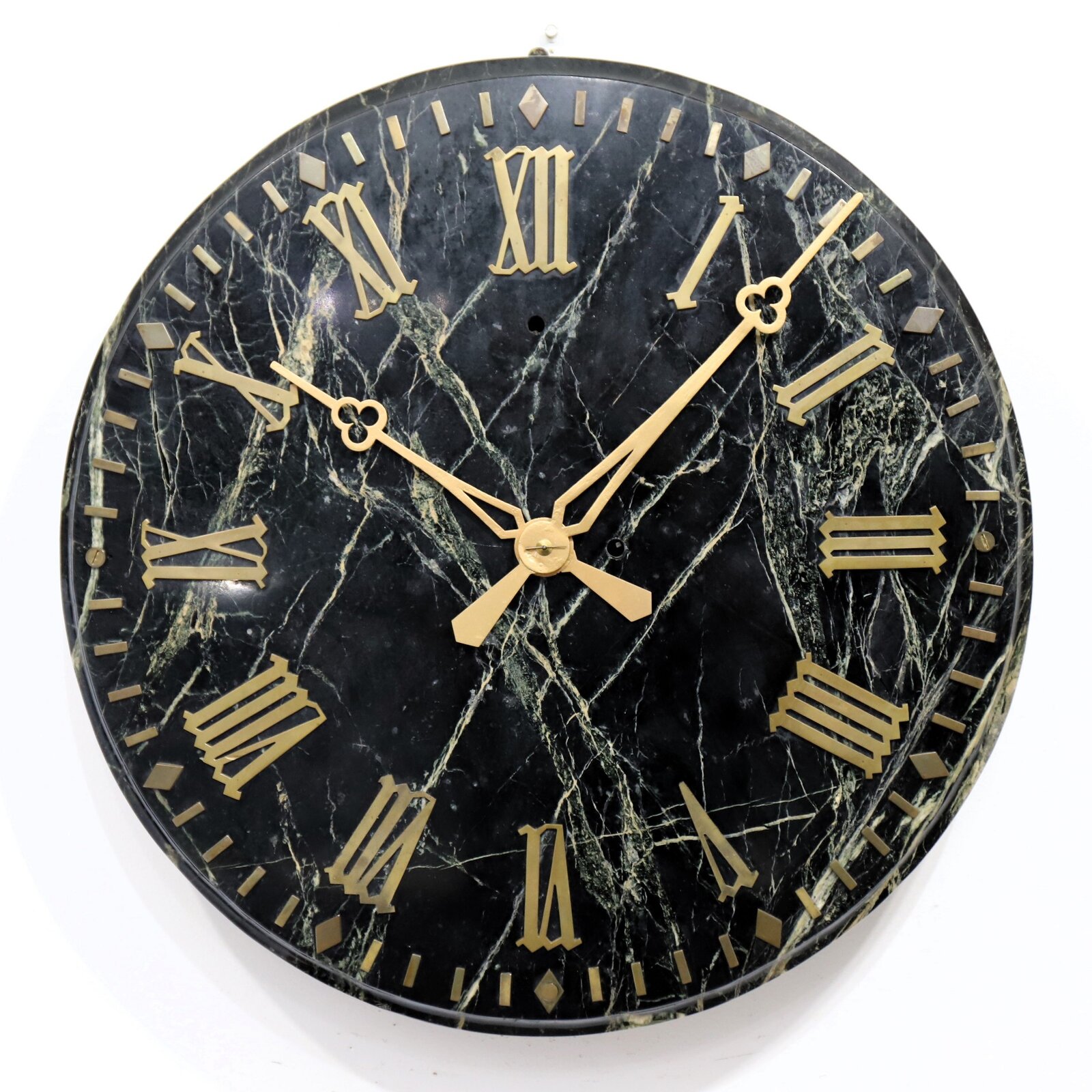
E. Howard & Co. “Marble Dial No. 21”, ca. 1923. The green marble dial is 24 inches in diameter, the smallest dial used in this weight-driven model. This model is typically seen with a white marble dial, so this must be a special order. There are no chips or cracks to the marble. It has applied bronze Roman numerals and minute markers, with gold-painted hands that are original/correct, but may have been painted. The 4-inch-deep case holds a signed Howard time-only, weight-driven movement with the 19-lb weight compounded on four metal pulleys around the top of the case. The pendulum is suspended from a rod at the top of the case that allows adjustment of the pendulum drop; at the bottom of the case is a lever that lets you tap the pendulum to start the clock. It is running without issue. No label to be found. Cottone’s sold a white marble example last fall for $1100. $1000–$1500. I posted this on the AAC Facebook page and Tom Kline asked about the hole in the dial below the XII. I had missed that entirely, but made up a story that I thought was pretty good. Russ Khederian blew my cover by explaining that the hole was for a mechanism found on some movements that allows adjustment of the pendulum length with a key through that hole in the dial (see photo below). The mechanism is missing here, perhaps never installed, and replaced by the adjuster rod that you see. Russ also pointed out that the weight is a replacement and the Geneva winding stop is missing. You can learn a lot around here. Looking for an easy way to save the clocks you like?
Record courtesy of AntiqueAmericanClocks.com