
Search Antique Clocks
Showing 1,181–1,200
of 7,426 clocks
type Wall
-
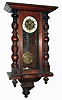 Clocks- 3 (Three) German walnut, 8 days, time and strike spring wound wall clocks, c1900
-
 Clocks- 2 (Two): A French wall clock, carved wooden case with cast brass ornament in the rococo style, Roman numeral white enamel dial, 8 days timepiece movement, and a German wall clock, carved walnut case, wooden dial with Roman numeral enamel cartouches, 8 days time and strike movement, with thermometer and barometer, both c1900
-
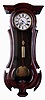 Remember, Ebensee, Austria, hanging regulator, walnut and walnut veneer case with carved serpentine front, Roman numeral white enamel dial, blued steel hands, 8 days weight driven timepiece movement, c1880
-
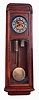 Junghans, Germany, walnut, time and strike, weight driven Vienna regulator wall clock, engraved pendulum and weights, c1920
-
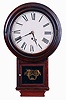 E. N. Welch Mfg. Co., Forestville, CT. "Round Top Drop" hanging clock in a rosewood case with an 8 day, spring driven timepiece movement, c1870.
-
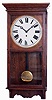 Arthur Pequegnat Clock Co., Canada, oak, 8 days, time only wall clock, c1920
-
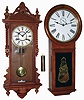 Clocks- 7 (Seven) wood case modern reproduction wall clocks: Seth Thomas No. 2-style; 3 octagon-top schools clocks; 3 other hanging clocks; late 20th century
-
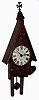 Clocks- 3 (Three), 8 days, Connecticut wall clocks: New England Clock Co., with time and strike, German movement, c1960; Ingraham "Hartford" oak long drop time only school clock, c1910; Jerome & Co., "Eclipse" dark oak long drop, time and strike, school clock; c1905
-
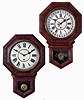 Clocks- 2 (Two): (1) E. N. Welch Manufacturing Co., Forestville, Conn., "Gentry" wall hanging clock in an oak case with a spring driven, 8 days timepiece movement, c1900. (2) Gilbert Clock Co., Winsted, Conn., "Admiral" wall hanging clock in an oak case with a spring driven, 8 days, time and calendar movement, c1910.
-
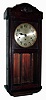 Clocks- 3 (Three) German, 8 days, time and strike, wood case hanging clocks; one R/A by Werner; one quarter chiming; c1905
-
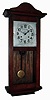 Clocks- 3 (Three) German wooden time and strike, 8 days wall clocks, one by Hamburg American, c1910
-
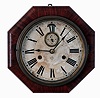 Clocks- 3 (Three) American: (1) Waterbury Clock Co., 8 days, spring driven brass movement drop octagon calendar timepiece, c1900. (2) Atkins Clock Co., 8 days, spring driven brass movement "Octagon Drop" wall timepiece, c1870. (3) Ansonia Clock Co., New York, NY, 8 days, time and strike, spring driven brass balance wheel movement octagon wall clock with seconds dial, c1900.
-
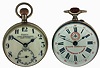 Clocks- 2 (Two): Paperweight clocks, (1) French made for John Wanamaker, New York, 8 days, stem wind and set timepiece movement, nickel case fitted with spherical glasses, Arabic numeral white enamel dial, 66mm diameter; (2) Swiss, 8 days, stem wind and pin set timepiece movement, nickel case fitted with spherical glasses, Roman numeral white enamel dial marked "Qualite Superieure Echappement Roskopf", 67 mm diameter, both c1900
-
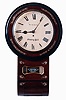 English, 8 days, spring brass fusee movement wall timepiece with MOP inlay, c1890
-
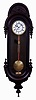 Austria, single weight "Vienna Regulator" Round top case, porcelain dial with embossed bezel, smooth faced pendulum and weight, c1870
-
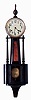 Clocks- 2 (Two): (1) New Haven Clock Co., "Waring", 8 days, time and strike, spring driven brass movement banjo clock. (2) E. Ingraham & Co., "Nile", 8 days, time and strike, spring driven brass movement banjo clock, c1915
-
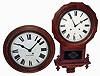 Clocks- 2 (Two) American, 8 days, hardwood wall clocks:, time and strike, Anglo-American-style with Ingraham movement; Seth Thomas time only oak gallery; 20th century
-
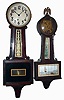 Clocks- 4 (Four) banjo clocks, mahogany, 8 days, Connecticut hanging clocks: New Haven, 8 days, time and strike, Waring, Whitney and smaller time only; and an Ingraham "Nyanza" time only. Early 20th century
-
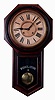 Ansonia Clock Co., New York, NY, "Regulator A" with a black walnut case and spring driven, 8 days, time and strike movement, c1884.
-
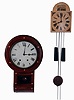 Clocks- 2 (Two): Anglo- American wall clock, mahogany veneered drop dial case, Roman numeral white painted dial, 8 day time and strike movement, and a Black Forest shield dial clock, Roman numeral painted dial, thirty hour weight driven movement with wooden plates, iron weights, both late 19th century